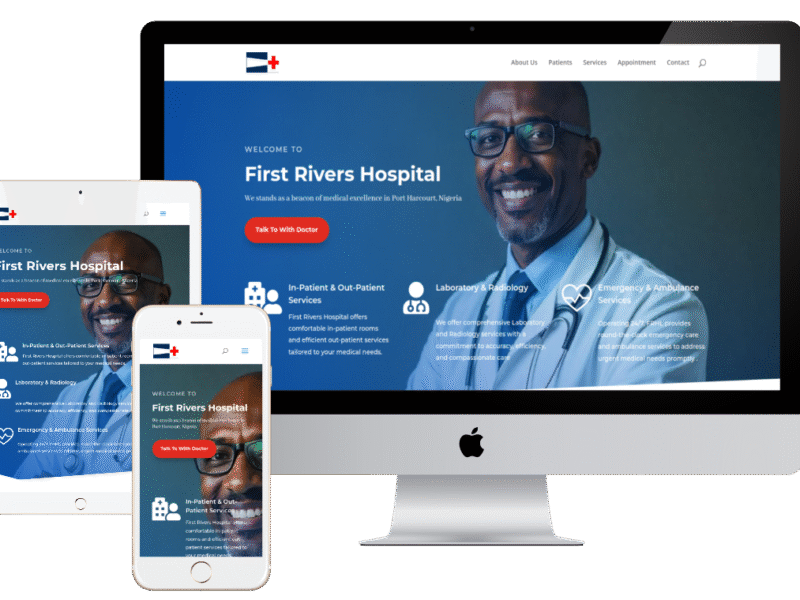
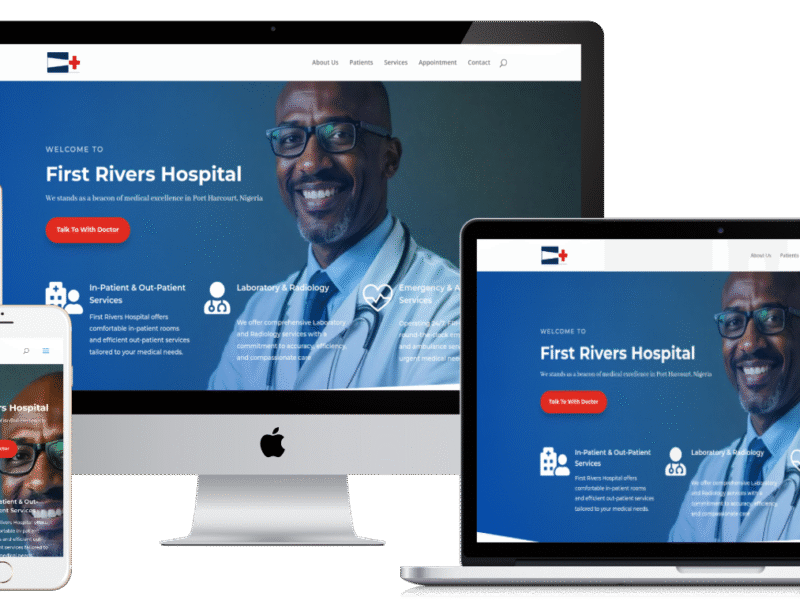
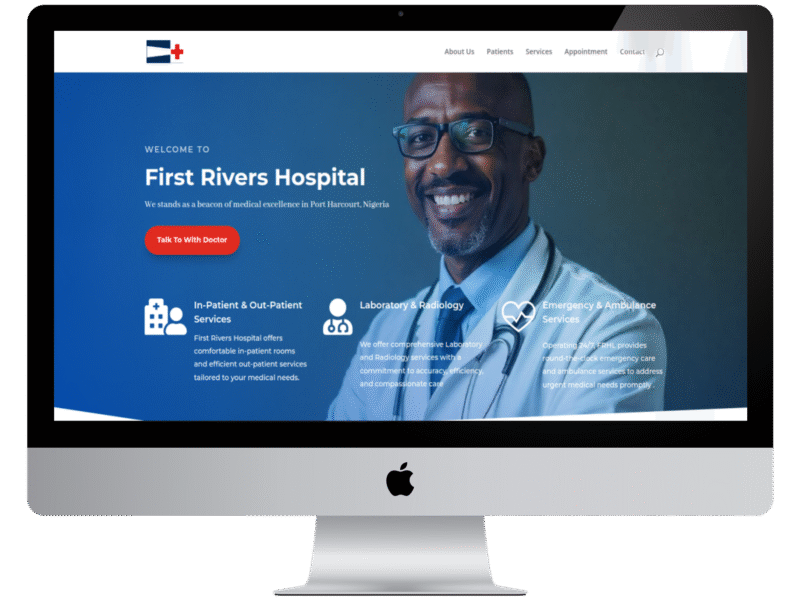
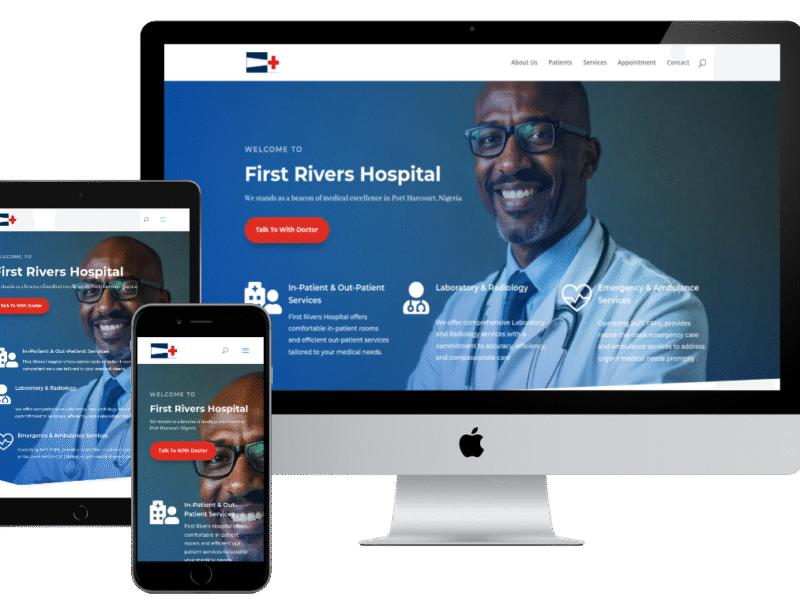
First Rivers Hospital – Website Design Project
Through a wide variety of mobile applications, we’ve developed a unique visual system and strategy that can be applied across the spectrum of available applications.
Through a wide variety of mobile applications, we’ve developed a unique visual system and strategy that can be applied across the spectrum of available applications.
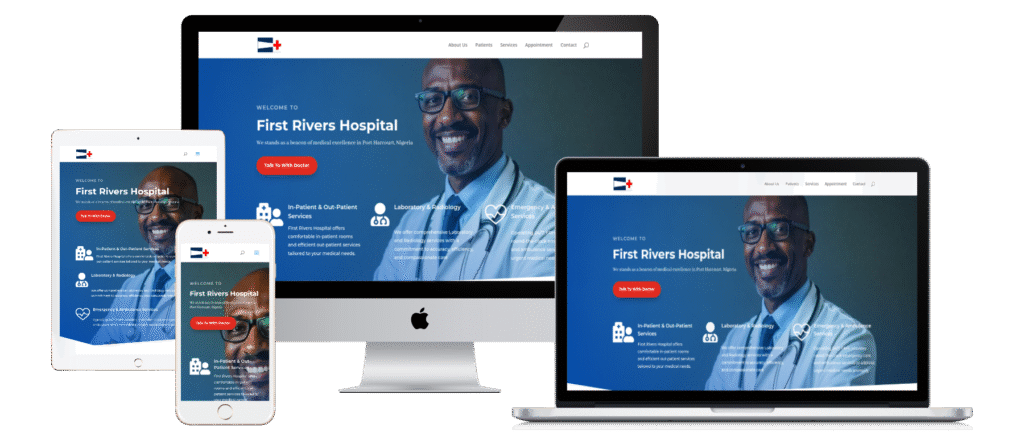
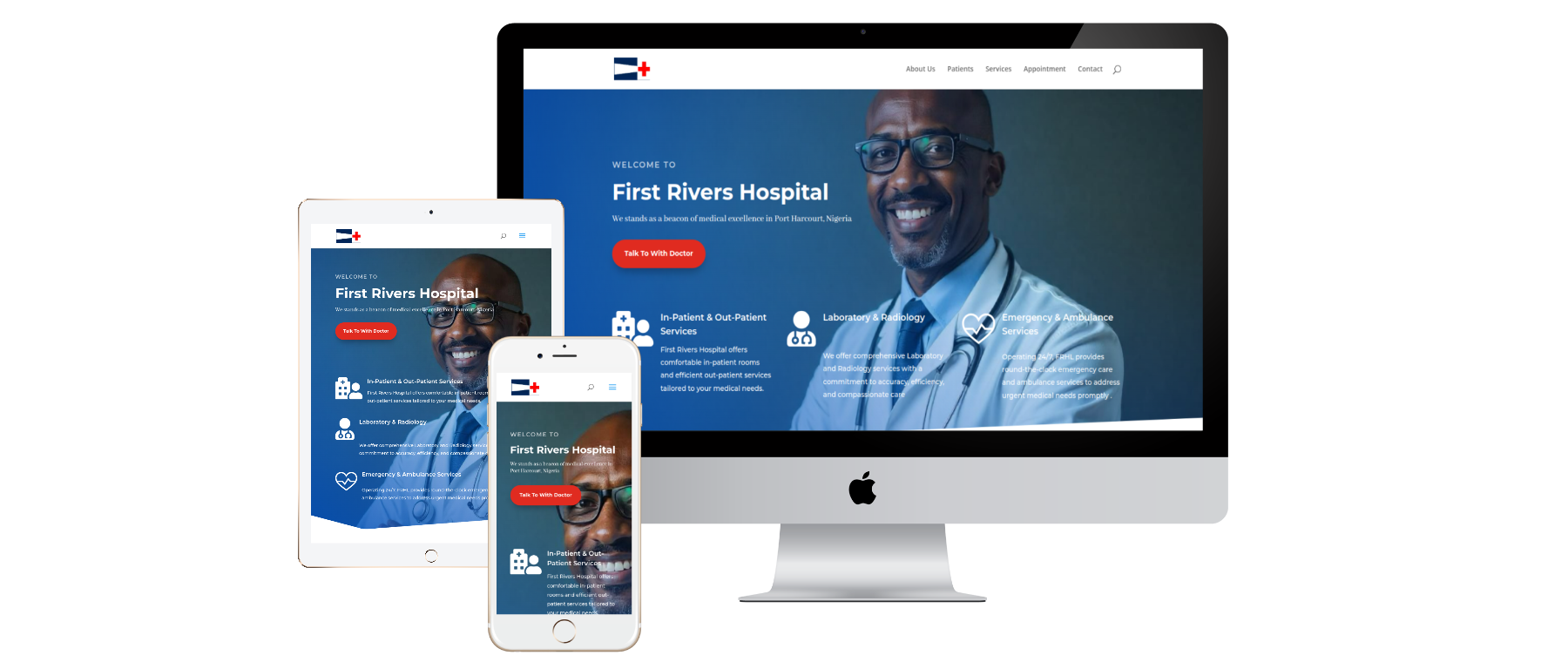
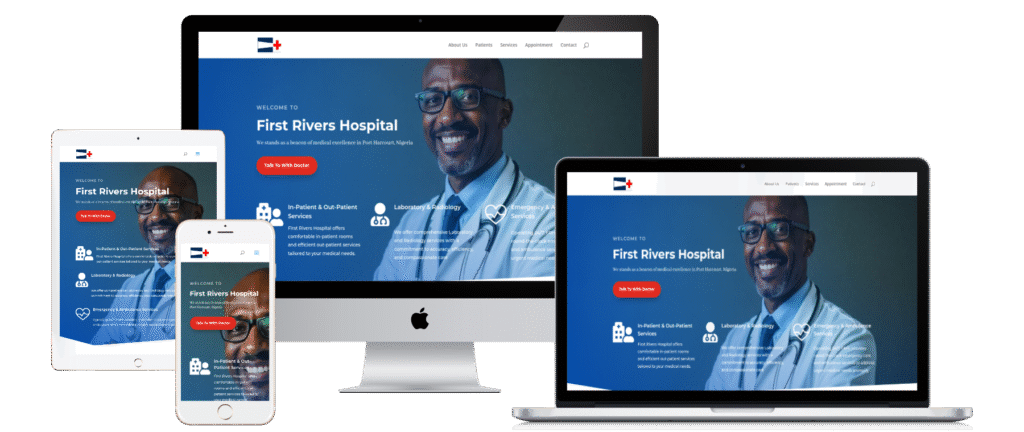
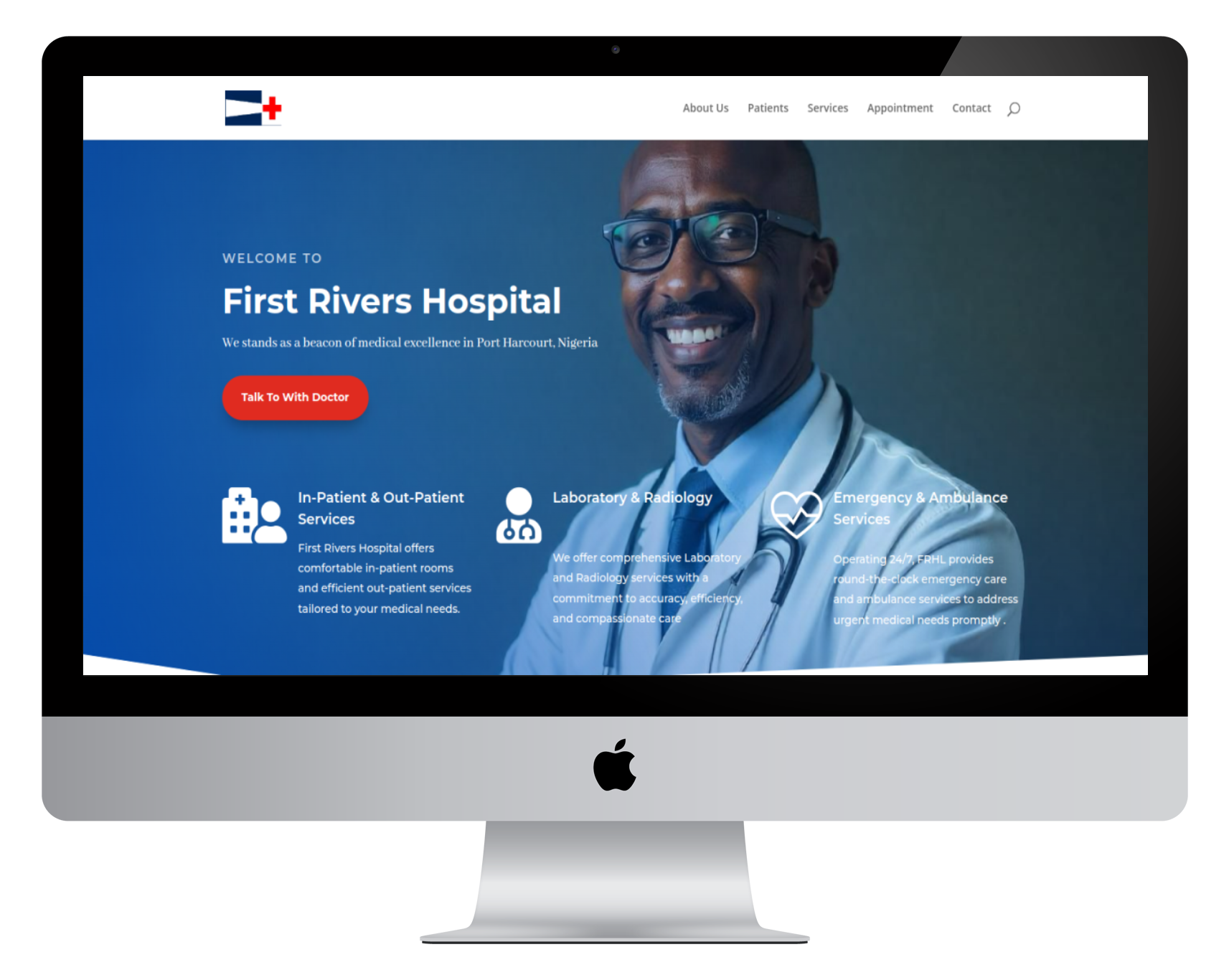
First Rivers Hospital
First Rivers Hospital Limited (FRHL) is a leading private healthcare institution in Port Harcourt, Nigeria, established in 1985 by Dr. Sola Olanrewaju. With over 150 dedicated staff and state-of-the-art medical facilities, the hospital provides comprehensive healthcare services across various specialties.
The project’s objective was to create a modern, responsive, and patient-friendly website that reflects FRHL’s excellence in medical care while improving accessibility, patient engagement, and service delivery. The website needed to act as a digital gateway for patients to book appointments, access information, and communicate seamlessly with the hospital.
Before the redesign, the hospital faced several limitations:
The challenge was to design an intuitive, patient-focused website capable of streamlining healthcare access while reinforcing the hospital’s brand identity.
I adopted a clean, minimal, and functional design tailored for the healthcare sector.
The design strategy focused on:
The Solution
The redesigned website delivered a highly functional and visually modern digital platform that enhances patient engagement and service efficiency.
Key features include:
UI/UX Design – Built using WordPress + Elementor, emphasizing clarity, trust, and patient-friendly usability.
Art Direction – Chose calm medical tones (whites, blues, and greens) combined with professional typography to reflect a reassuring healthcare environment.
Features Delivered:
First Rivers Hospital Limited (FRHL)
Theme & Stack: WordPress • Elementor • HTML5 • CSS3 • JavaScript • SEO Optimization
The redesigned website successfully transformed FRHL’s digital presence, resulting in:
A seamless digital experience that reflects FRHL’s commitment to excellence, innovation, and patient care.
Increased online appointment bookings and virtual consultations.
Improved patient satisfaction through faster access to information and services.
Enhanced visibility of specialized departments and medical expertise.
Stronger digital brand identity, positioning FRHL as a modern healthcare leader.
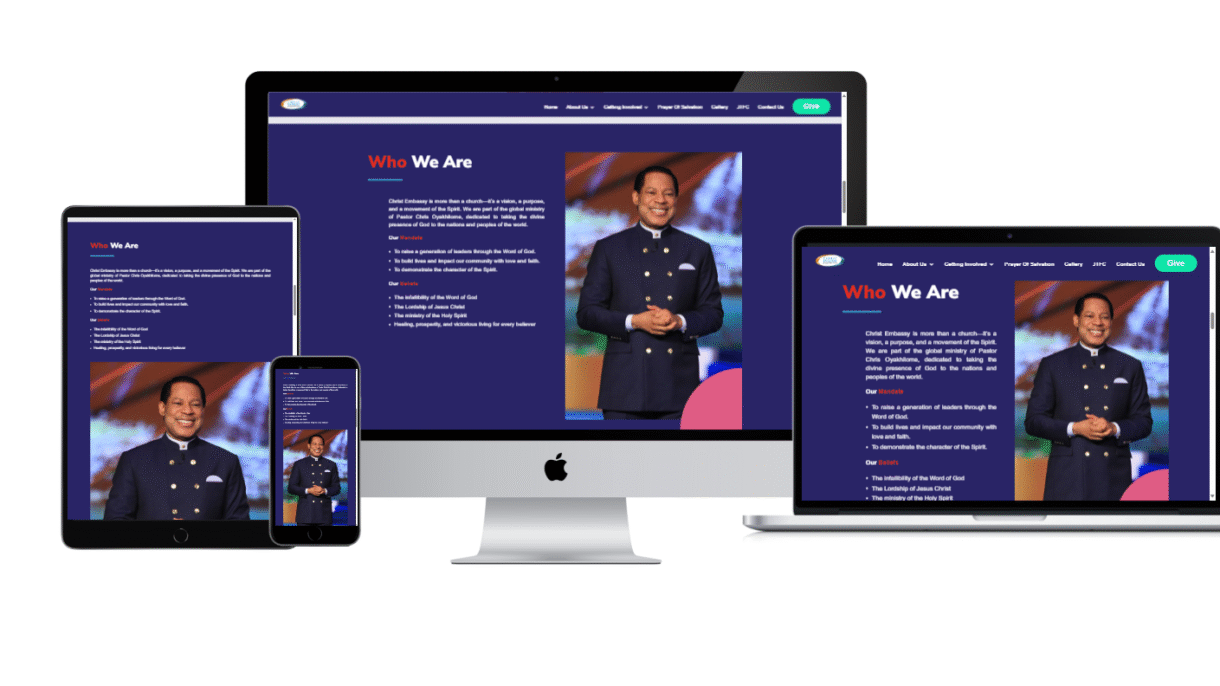
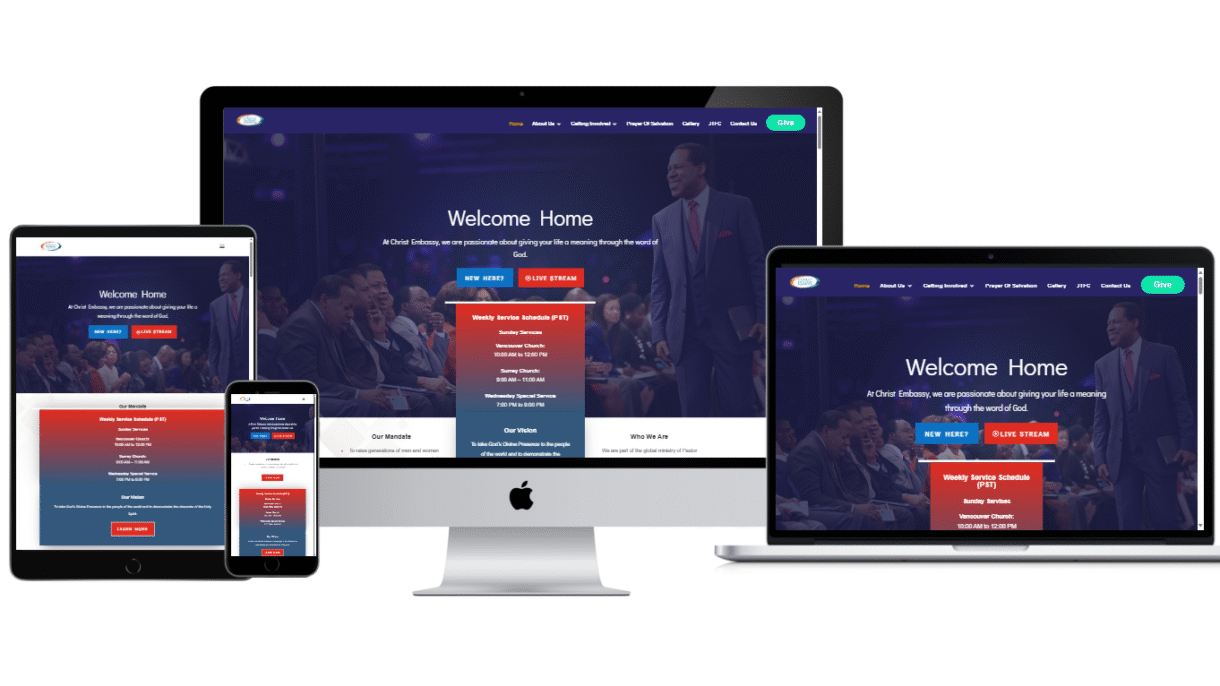
Christ Embassy British Columbia
Christ Embassy BC is part of the global ministry of Pastor Chris Oyakhilome, with a mission to take God’s divine presence to the world and transform lives through the Word of God.
The goal of this project was to create a modern, responsive, and community-driven website that would serve as a digital hub for worshippers, visitors, and partners.
The website needed to streamline access to sermons, events, giving options, and ministry resources while reflecting the vibrant spirit and vision of the church.
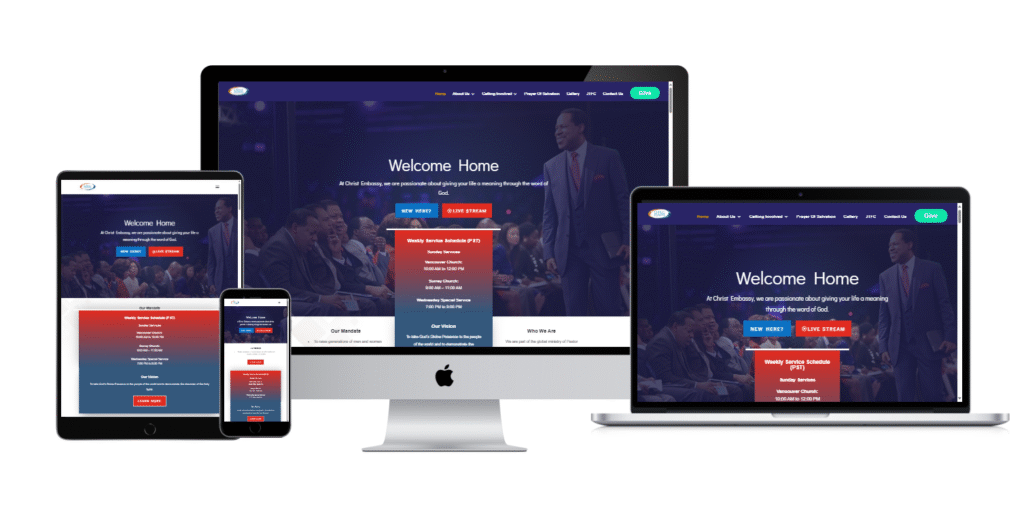
Before the redesign, the ministry lacked a centralized, user-friendly online platform where members and visitors could:
The challenge was to merge all these features into a seamless, visually inspiring experience without overwhelming the user.
I adopted a minimal, functional, and responsive design strategy that balanced spiritual elegance with modern usability.
Key design priorities included:
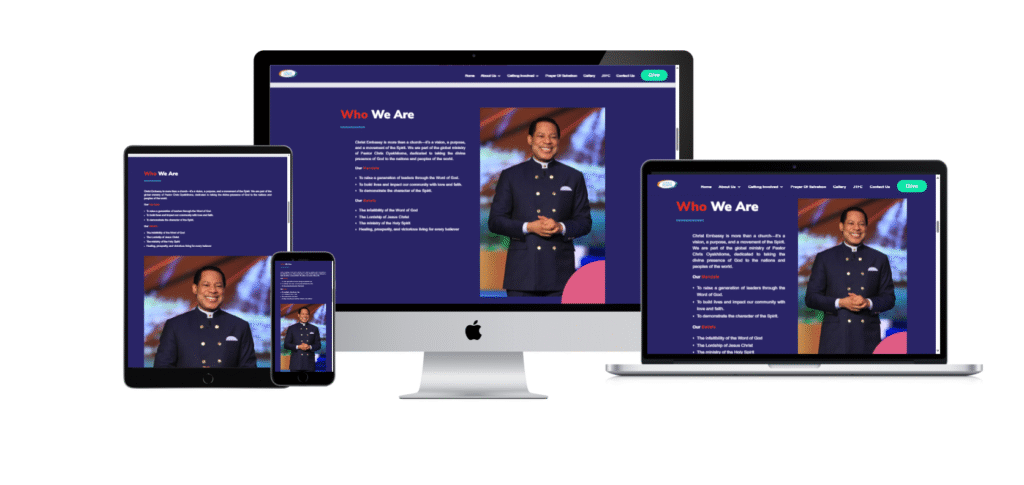
The final website delivered a vibrant, engaging, and functional online platform that supports the church’s mission and community.
Key features include:
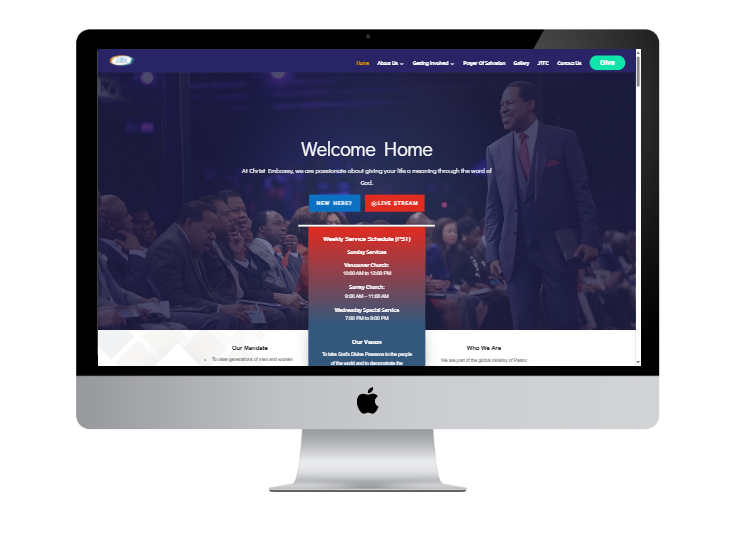
UI/UX Design – Built using WordPress + Elementor with a focus on a clean, faith-centered experience.
Art Direction – Employed warm, uplifting colors, engaging visuals, and modern typography to reflect the ministry’s values.
Features Delivered:
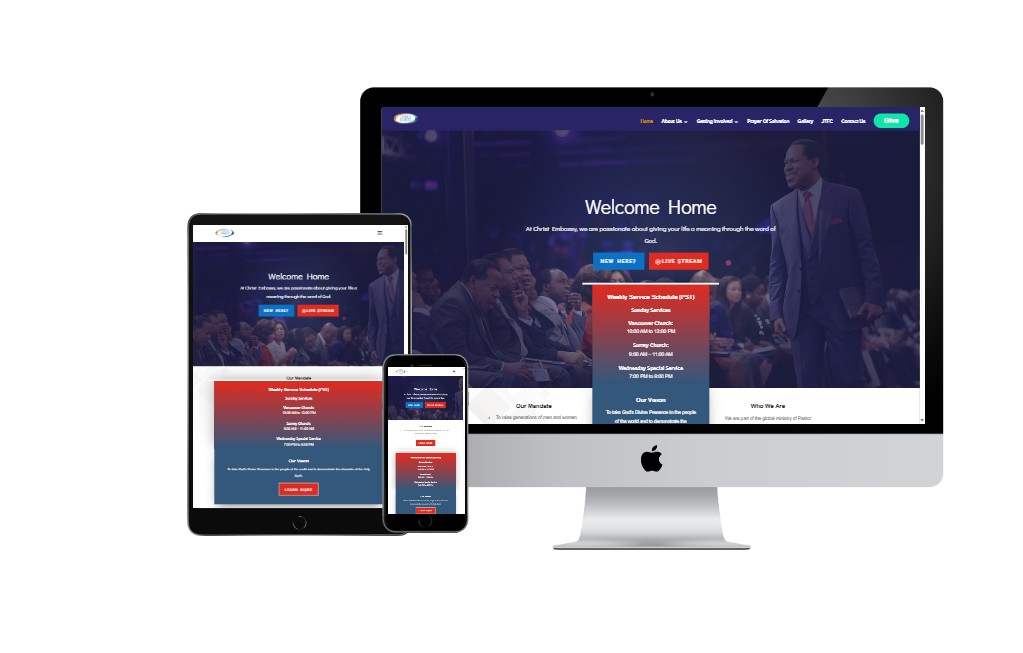
Christ Embassy British Columbia
Theme & Stack: WordPress • Elementor • HTML5 • CSS3 • JavaScript • SEO Optimization
The redesigned website has become the digital home for the Christ Embassy BC community, enabling:
Stronger digital presence aligning with the global Christ Embassy brand.
Seamless online giving and donations.
Easy access to service schedules and events.
Increased engagement via live streams and recorded sermons.
Growth of the ministry’s membership and volunteer participation.
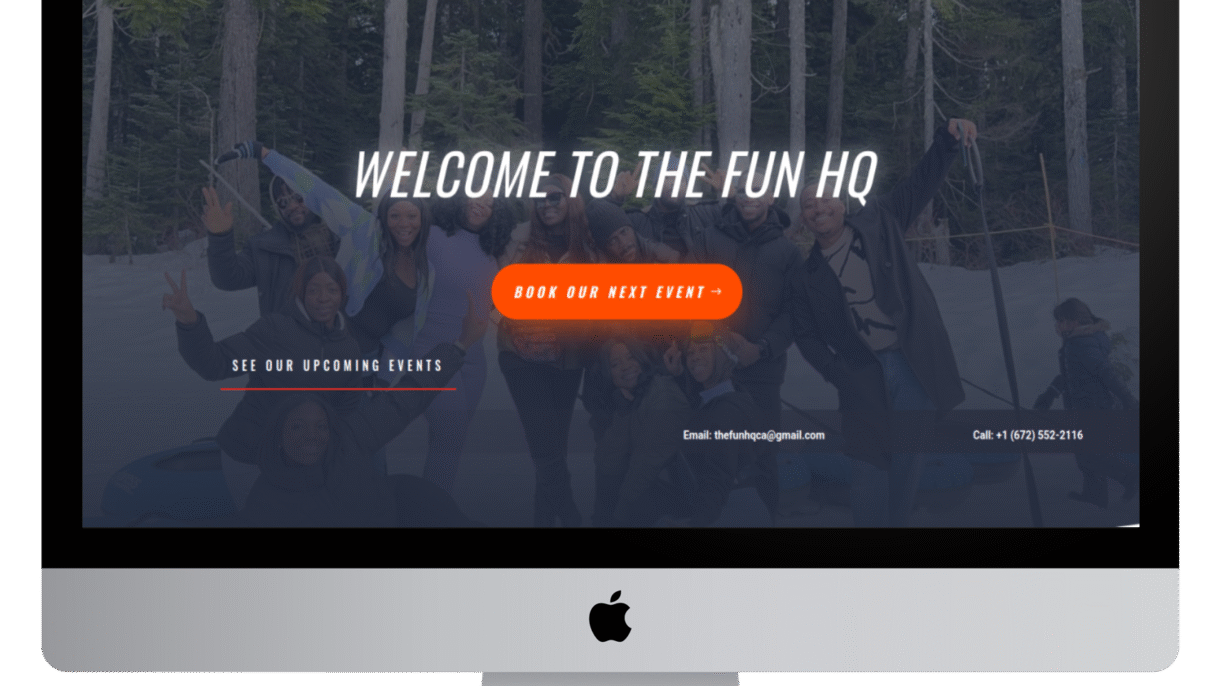
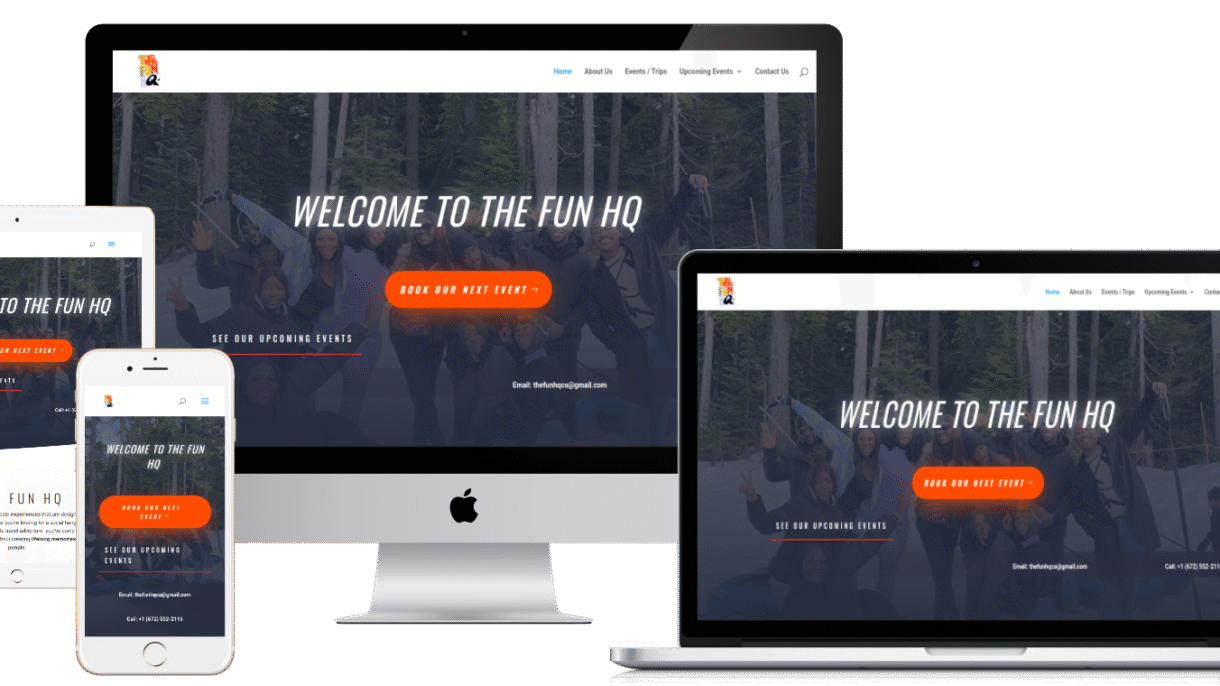
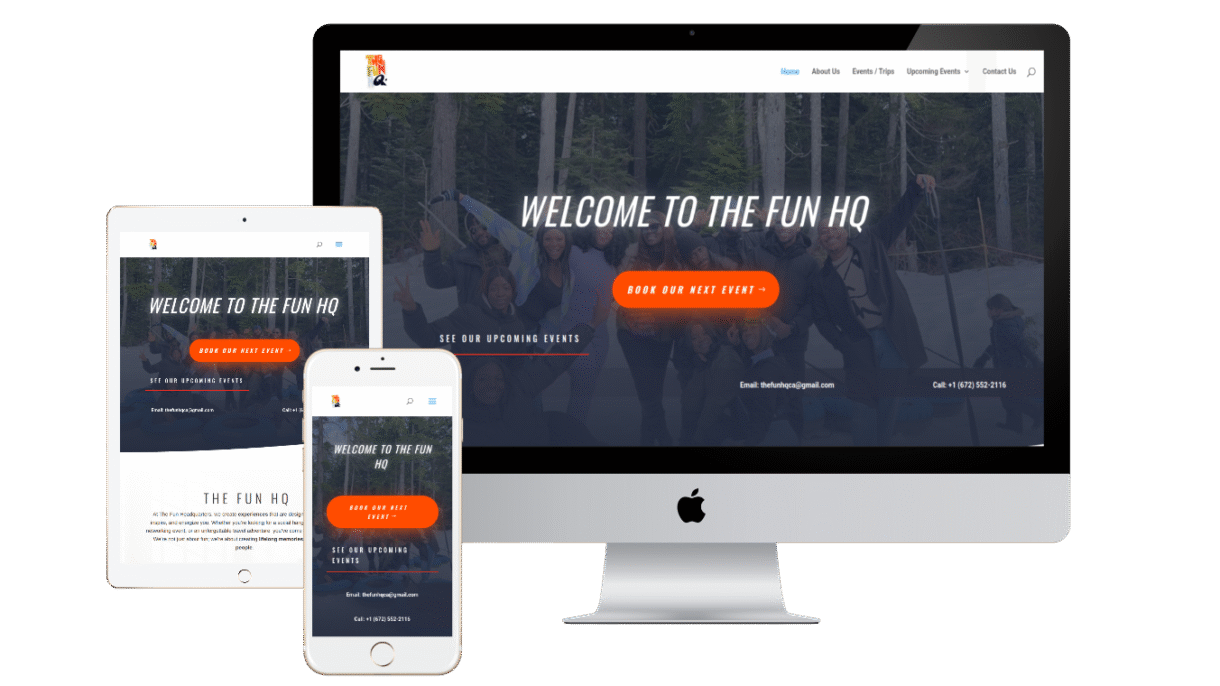
The Fun Headquarters is a vibrant community platform designed to connect people through events, adventures, and networking opportunities.
The strategy behind the website was to create a modern, engaging, and user-friendly platform where users can explore events, book trips, and join a growing community — while reflecting the brand’s energy, inclusivity, and mission of building unforgettable memories.
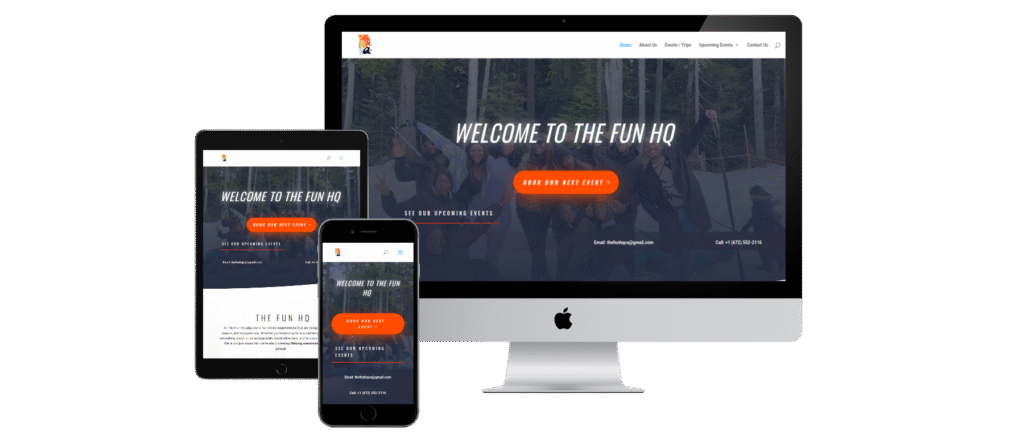
The existing brand lacked an online presence where people could easily find upcoming events, join trips, or connect with the community.
The challenge was to design a responsive, scalable, and visually appealing website that could:
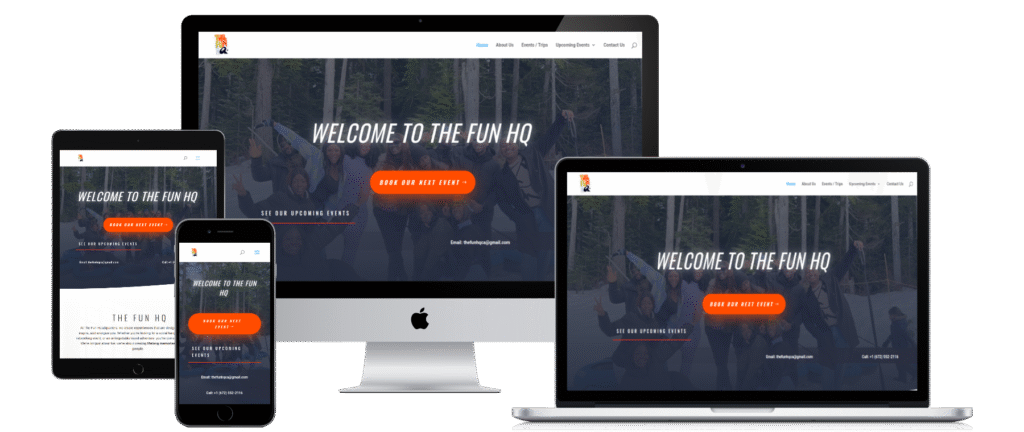
I focused on designing a dynamic, interactive, and user-centric website that aligned with the FunHQ brand identity.
Key considerations included:
The final design delivered a modern, vibrant, and functional website that achieved the project goals.
Key solutions included:
UI/UX Design – Built with WordPress + Elementor for flexibility, optimized layouts, and modern styling.
Art Direction – Bright, vibrant visuals paired with clean typography to reflect FunHQ’s adventurous energy.
Features Delivered
The Fun Headquarters
Theme & Stack: WordPress • Elementor • HTML5 • CSS3 • JavaScript • SEO Optimization
The website transformed FunHQ into a central digital hub where people can:
It has strengthened the FunHQ brand by driving membership growth, increasing event participation, and fostering a sense of belonging and connection.
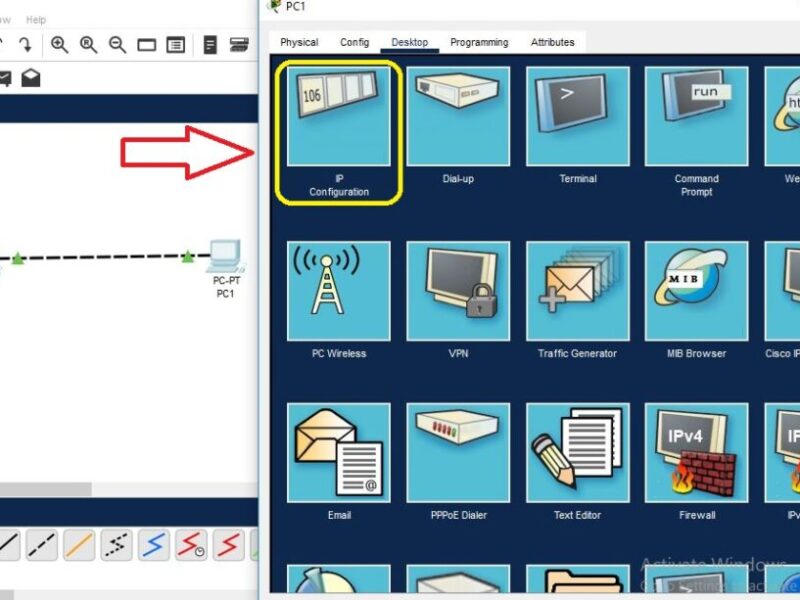
This project focused on designing and securing a Small Office/Home Office (SOHO) network by simulating firewall functionality using a router and Layer 3 switch. The goal was to control network access through Access Control Lists (ACLs), enforce segmented security policies, and demonstrate how firewall rules can block, allow, and restrict traffic based on device roles and IP addresses.
A small office/home office environment required enhanced network security. To achieve this, the firewall was configured to:
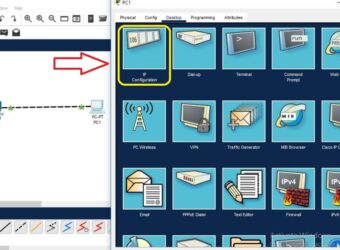
Step 1: Network Setup
Step 2: Firewall Configuration Using ACLs
Step 3: Access Restrictions
Step 4: Testing Firewall Rules
Step 5: Documentation
By completing this project, I gained practical experience in:
✅ Configuring router-based firewall functionality using ACLs.
✅ Designing security policies for SOHO environments.
✅ Implementing role-based access control for sensitive resources.
✅ Testing and validating firewall rules using simulation tools.
✅ Documenting configurations and explaining security design decisions.
Network Security
Firewall Configuration (ACLs)
Cisco Packet Tracer Simulation
Access Control & Policy Design
Testing & Troubleshooting Network Security
Documentation & Reporting

This project simulated real-world cyberattacks and SOC operations for a mid-sized technology consulting company, SoluTech, which provides cloud services, web hosting, and IT support across Africa. The objective was to simulate attacks, detect incidents, analyze alerts, and produce a structured SOC report to improve SoluTech’s overall security posture.

SoluTech recently observed unusual login attempts and suspicious network traffic on several endpoints through its Wazuh dashboard. To improve their detection and response strategy, the SOC team set up a simulated environment to:
By completing this project, I gained hands-on experience in:
✅ Conducting controlled red team attacks.
✅ Using Wazuh SIEM to detect and analyze alerts.
✅ Performing effective incident response with pfSense and segmentation.
✅ Writing a structured SOC Incident Report aligned with industry standards.
✅ Understanding attacker methodologies and defensive countermeasures.
Security Operations (SOC)
Threat Detection & Incident Response
SIEM Tools (Wazuh)
Offensive Security (Kali, Hydra, Nmap)
Firewall & Network Segmentation (pfSense)
Professional Security Reporting
Perform open-source intelligence (OSINT) gathering using industry-standard tools.
Identify digital exposures such as documents, APIs, employee data, and historic URLs.
Correlate findings with real-world attack scenarios including phishing, credential stuffing, and social engineering.
Provide risk-based recommendations aligned with cybersecurity best practices.
Maintain ethical and legal standards by using only passive, publicly available information.
The assessment was conducted in structured phases using widely accepted OSINT techniques and tools:
Google Dorks: Discovered exposed PDFs and misconfigured directories.
Hunter.io & theHarvester: Verified employee email formats and harvested subdomains.
Shodan & WHOIS: Mapped external infrastructure, open ports, and DNS configurations.
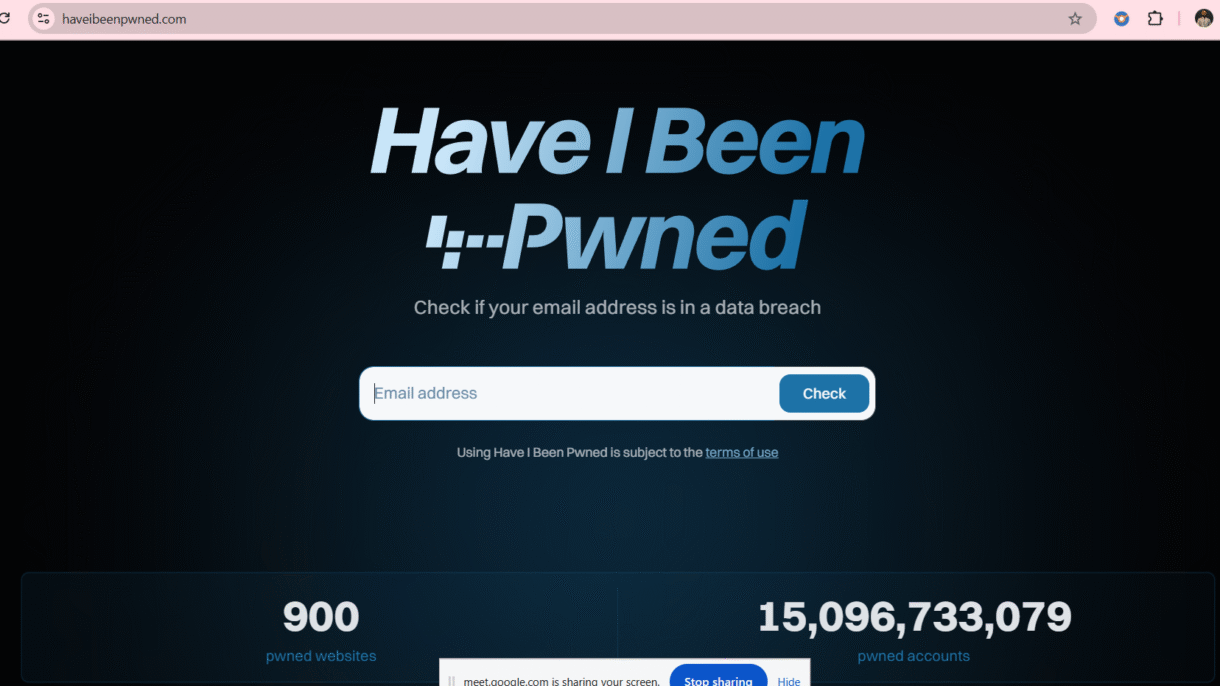
HaveIBeenPwned & SOCRadar: Checked for leaked credentials and dark web mentions.
Wayback Machine: Identified outdated APIs and deprecated login portals.
LinkedIn Reconnaissance: Analyzed employee exposure and oversharing risks.
📂 Exposed Documents: Public PDFs containing internal financial and operational information.
🔑 API Keys and Tokens: References to sensitive data discovered in GitHub repositories.
📧 Email Exposure: Employee email formats confirmed; some accounts linked to past data breaches.
🌐 DNS Misconfigurations: Merchant subdomains exposing directory listings.
🕰️ Historic Attack Surface: Deprecated login paths and outdated APIs accessible through Wayback Machine.
👤 Employee Oversharing: LinkedIn profiles revealing roles, technologies, and access levels.
Implement automated secret scanning and regular token rotation in repositories.
Harden merchant domains and disable public directory indexing.
Enforce SSO and MFA for all employees.
Launch security awareness training to reduce exposure via LinkedIn and other platforms.
Set up continuous dark web monitoring to identify leaked credentials early.
This assessment was performed under strict adherence to ethical OSINT practices.
Only publicly available information was collected.
No scanning, exploitation, or unauthorized access was performed.
Sensitive identifiers and confidential information were masked in all reports.
This project demonstrates my ability to:
✅ Conduct structured OSINT investigations.
✅ Translate findings into real-world security risks.
✅ Produce professional threat intelligence reports with actionable recommendations.
✅ Apply ethical and legal standards to cybersecurity assessments.
OSINT and Threat Intelligence
Network and Application Security
Passive Reconnaissance Tools: Shodan, theHarvester, HaveIBeenPwned, SOCRadar
Professional Reporting and Documentation
Risk Analysis and Security Recommendations
Hello